Japan
Where does one even begin after spending a month in a completely foreign country? Should we talk about what was so great? The snow? The weather? The food? Or just write about the time we shared together? We actually wanted a short, punchy intro. But who are we to pretend otherwise, after everything that happened.
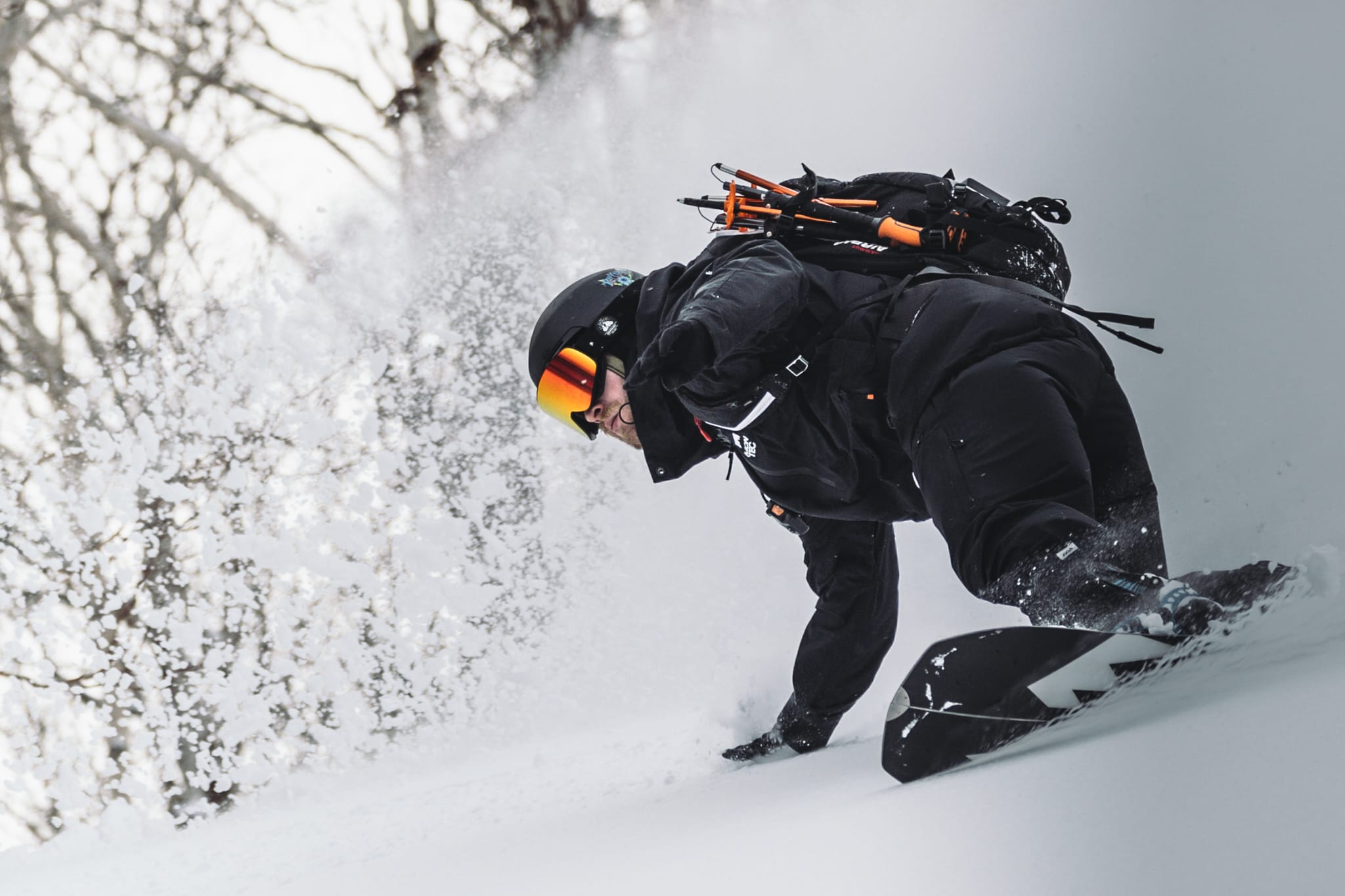
Well then, let’s start at the beginning: it all started with an idea. The idea of going to Japan and simply shredding some incredible powder.
When the topic first came up, Xavier, Manuel and David just wanted to go to the mountains abroad together. Long story short, Norway was the destination back then.
But the idea was never forgotten and was later picked up again, this time with more people and significantly more experience. So we sat down and started rough planning. What do we need? What are the expectations? What about sponsorship? All questions that needed answering. This was 1.5 years before the actual trip. Yes, we are the kind of people who plan 1.5 years in advance and still show up at the airport with overweight luggage.
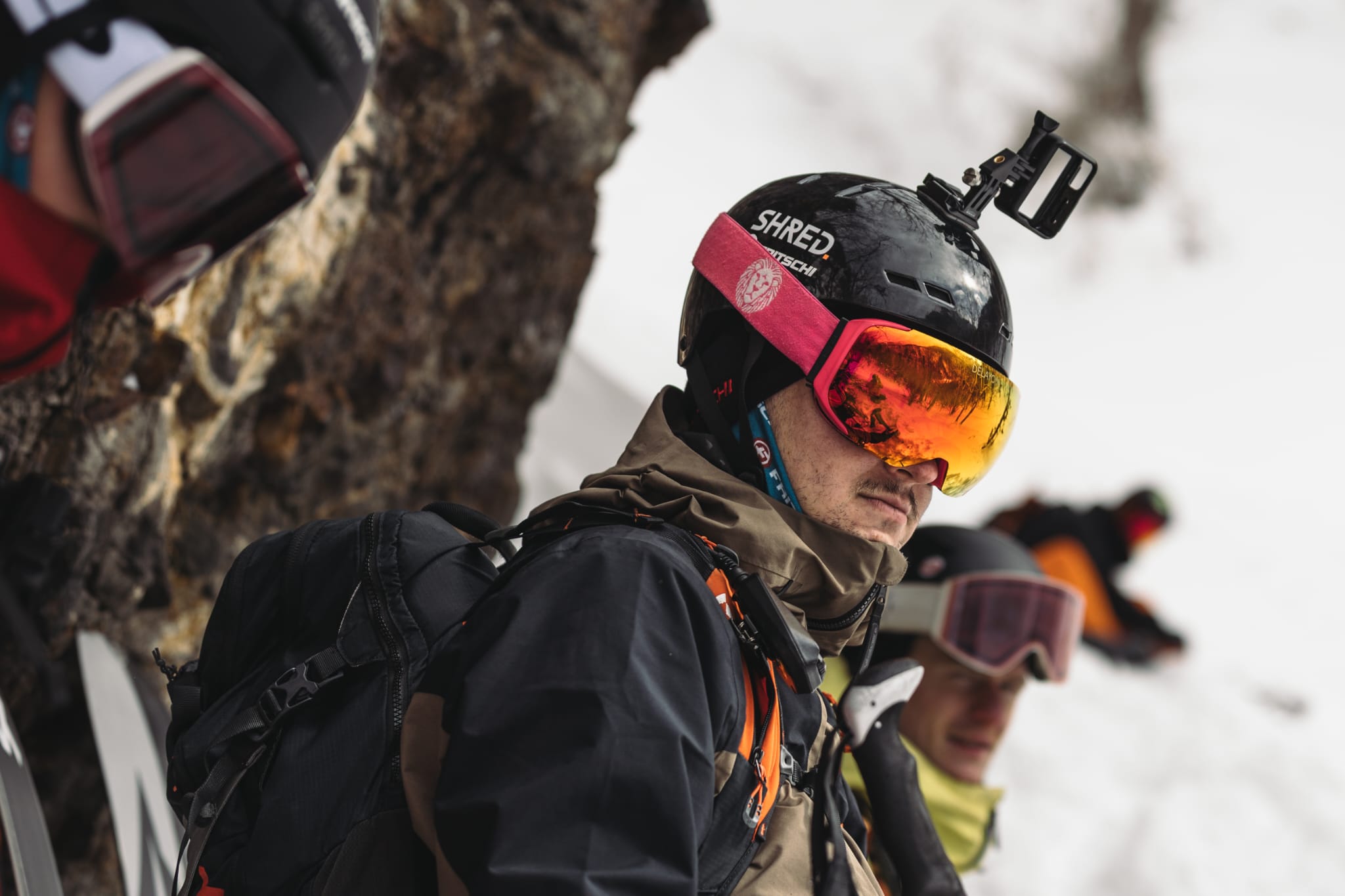
Before wasting any unnecessary digital words: it was an incredible experience and we actually managed to find a sponsor: Fritschi! We would like to once again sincerely thank you for everything you gave us, and for giving us a closer look at the Fritschi workshop and its history.
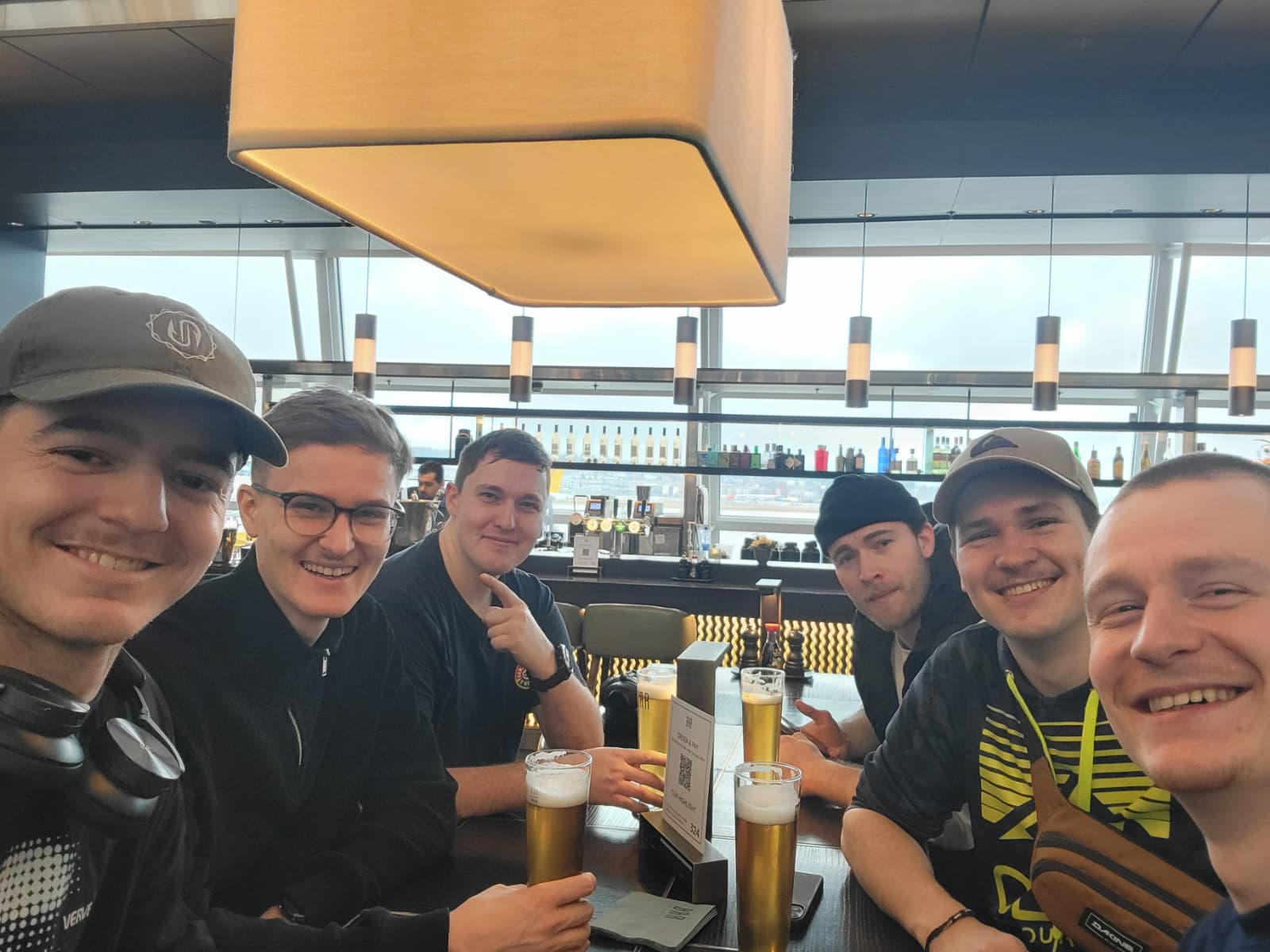
It all kicked off at Zurich Airport. Everyone packed, everyone overweight. So we did the classic thing and redistributed everything into every available bag. Socks into the backpack, helmet into the handbag, dignity already long gone. Once the stress of check-in and baggage drop was over, it was finally time for the first bar. It was time for the first beer… and it would not be the last, because a 12-hour flight gives you a dry throat. And once you’ve started, you don’t stop easily.
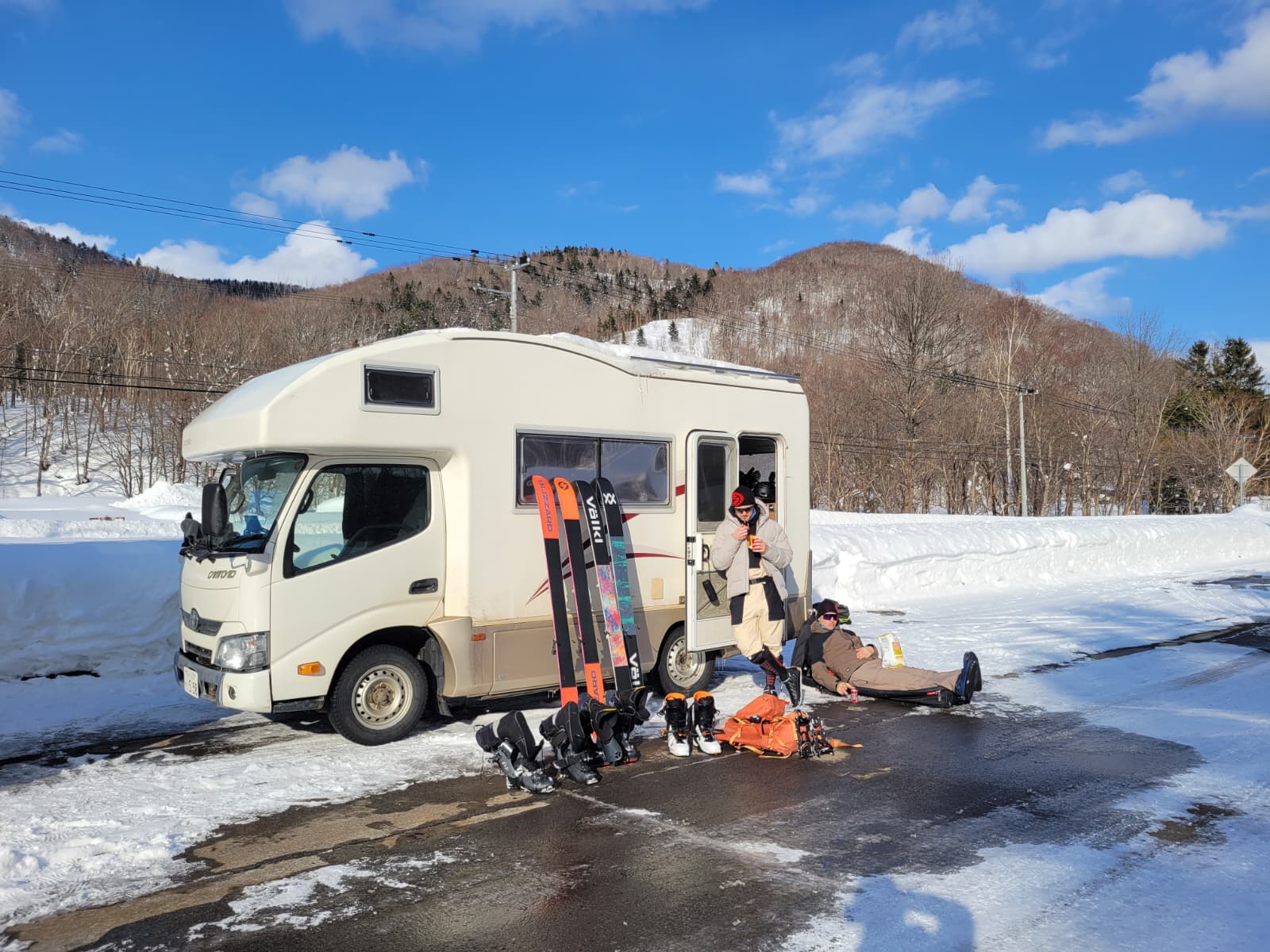
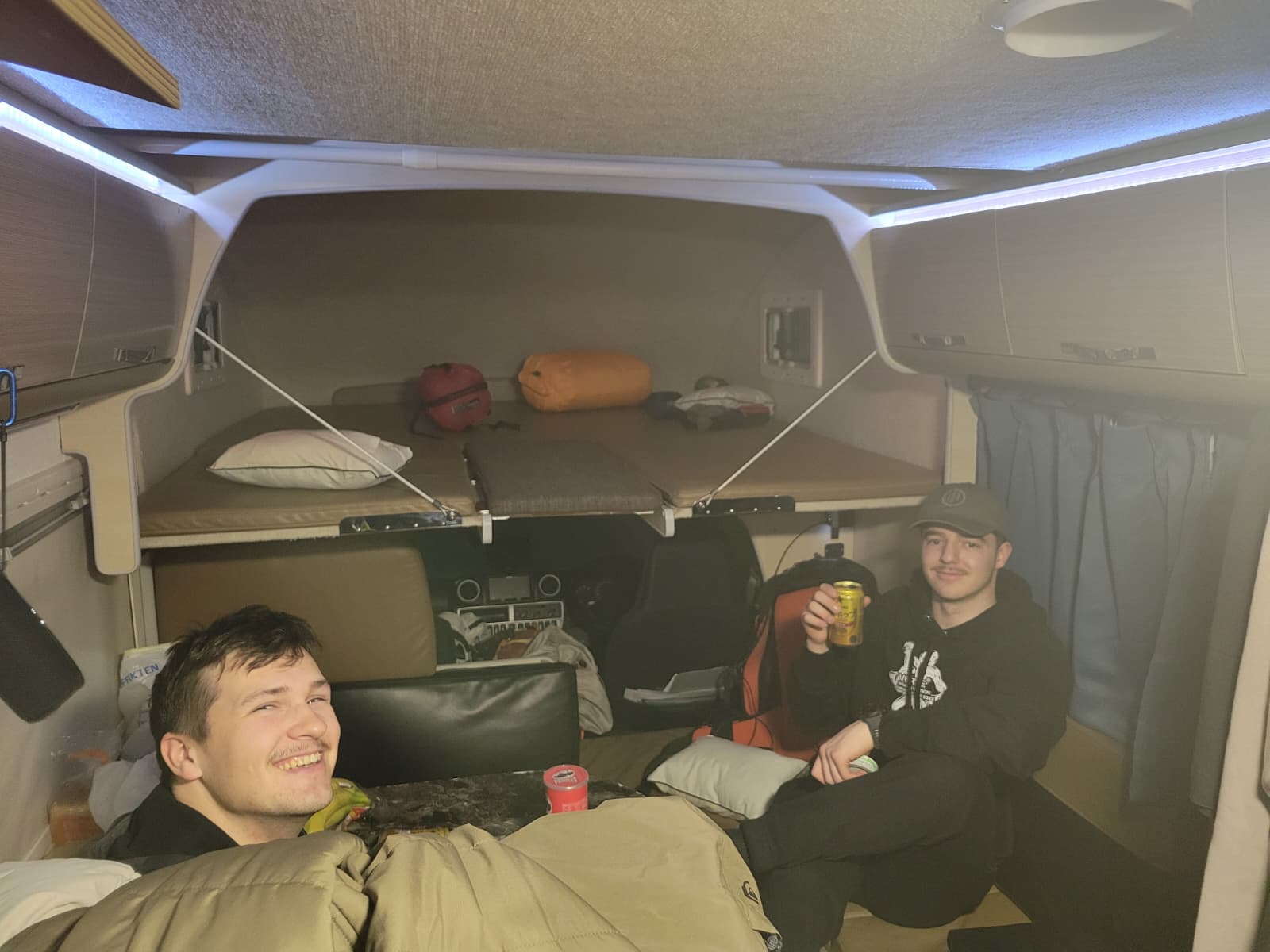
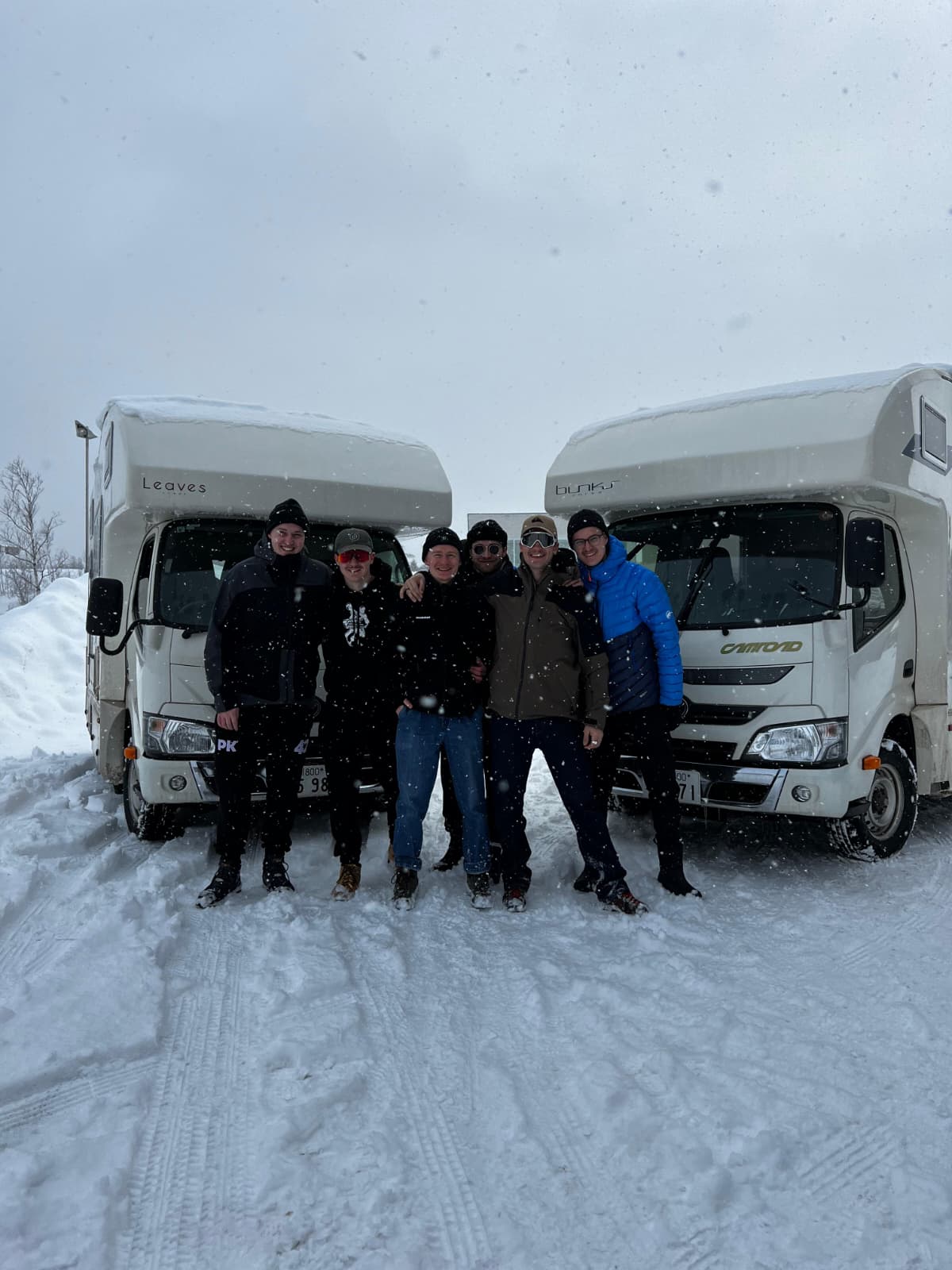
After arriving in Japan and spending another night at a hotel, we were able to pick up our campervans. They were great and comparatively affordable. Funnily enough, we had tried to rent campervans a year earlier. Back then we were told they didn’t rent them out in winter and that we should get in touch at a specific point in time. At exactly that point in time we reached out again, but somehow all the campervans were already booked. Was that a coincidence? We say: no. But we got very lucky and found 2 available. The universe had a change of heart after all.
After getting used to driving on the left, things really got going. The adjustment was surprisingly quick overall, apart from the occasional moments when the roads were suspiciously empty and someone would unconsciously try to introduce right-hand traffic to Japan. Thanks to attentive passengers with a healthy survival instinct, these attempts were always quickly and successfully aborted. Luckily. There were no accidents, well, one tiny, minor one we almost forgot to mention: a certain person forgot what reversing means, or rather everything that goes with it. And so it happened as it had to: they bumped the nose of our second campervan. But thanks to the generous amounts of snow we diligently collected on our drives along the front grille and rear end, there wasn’t a single scratch. The person knows who they are. We’re not saying. They know.
It didn’t take long before we were amazed by the nature, the snow, the cold temperatures, the food, mainly the food, and by constantly being overtaken by locals at incredible speeds. A quick bit of research later, we learned that there are essentially no speed controls or speed cameras. So: no time to waste, let’s see what these things can do. Spoiler: more than expected, less than hoped.
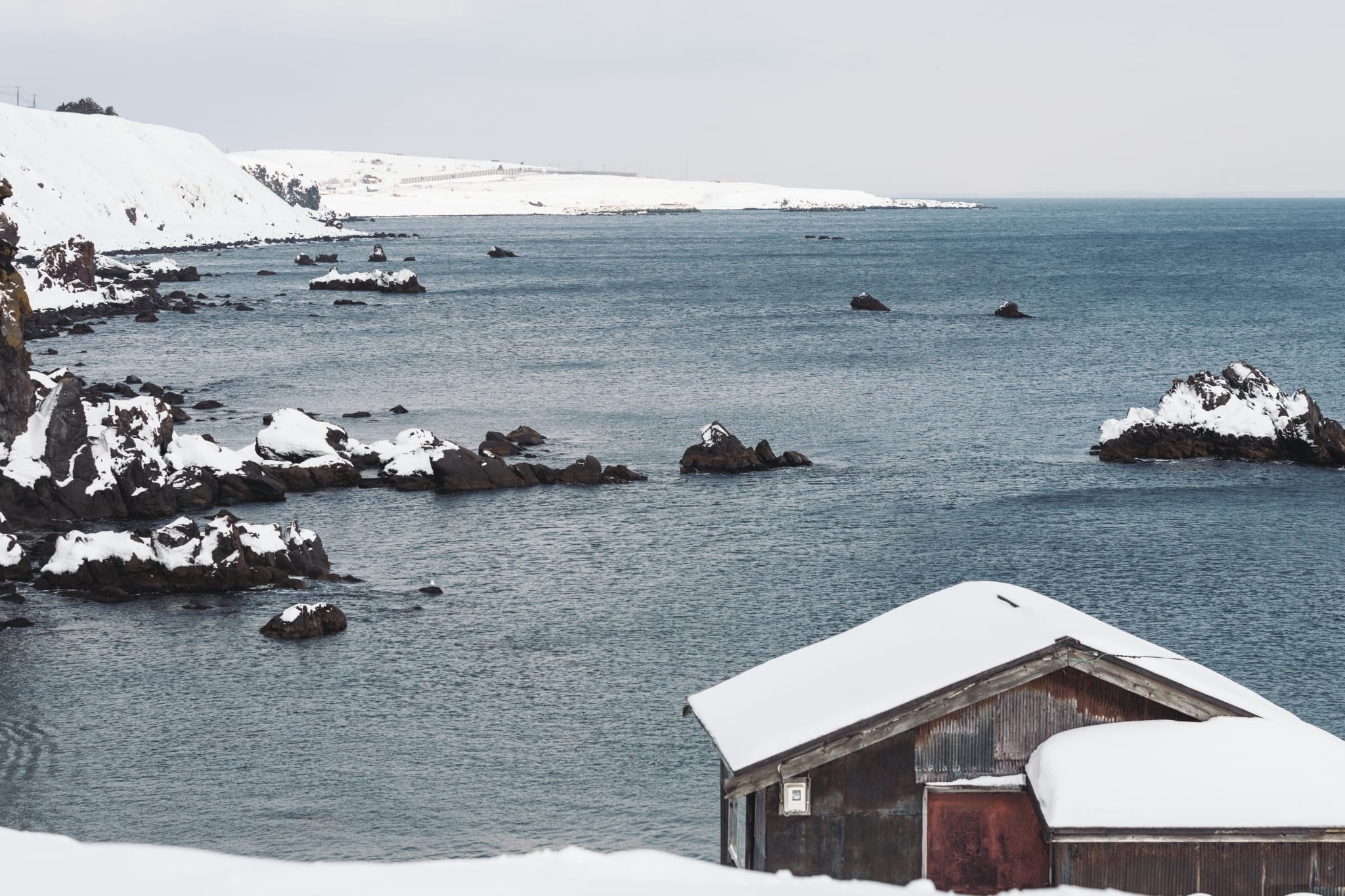
Our journey took us through western Hokkaido from top to bottom. The main goal: Mt. Rishiri. And right at the end, much to David’s displeasure, also Niseko. Great for freeriding, of course, but if you want to see something of the country, get to know the culture and the people, you’re definitely in the wrong place there. Everything costs at least twice as much, and just walking into a restaurant is out of the question, you queue. David enjoyed that about as much as a wet sock in a ski boot.
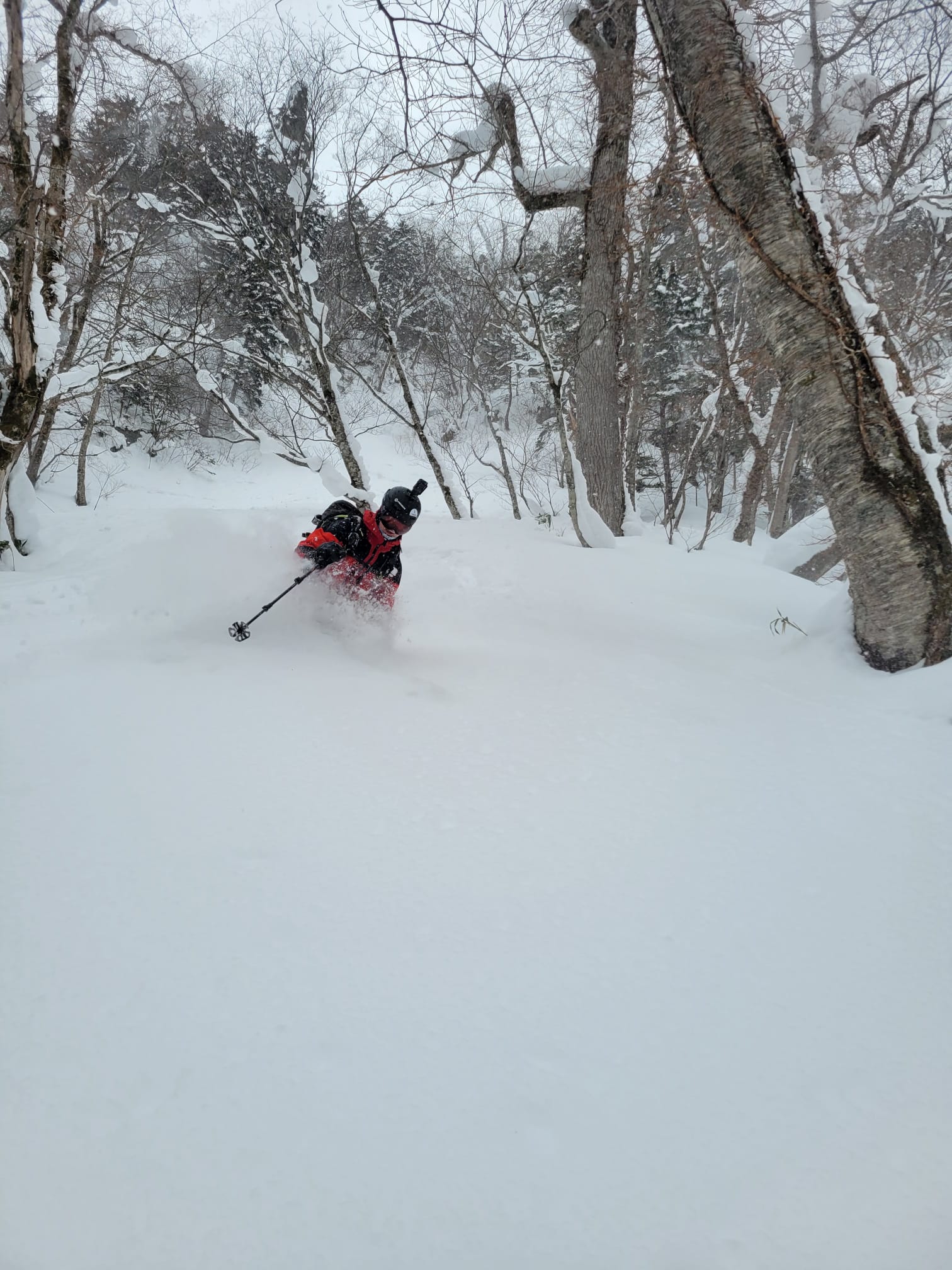
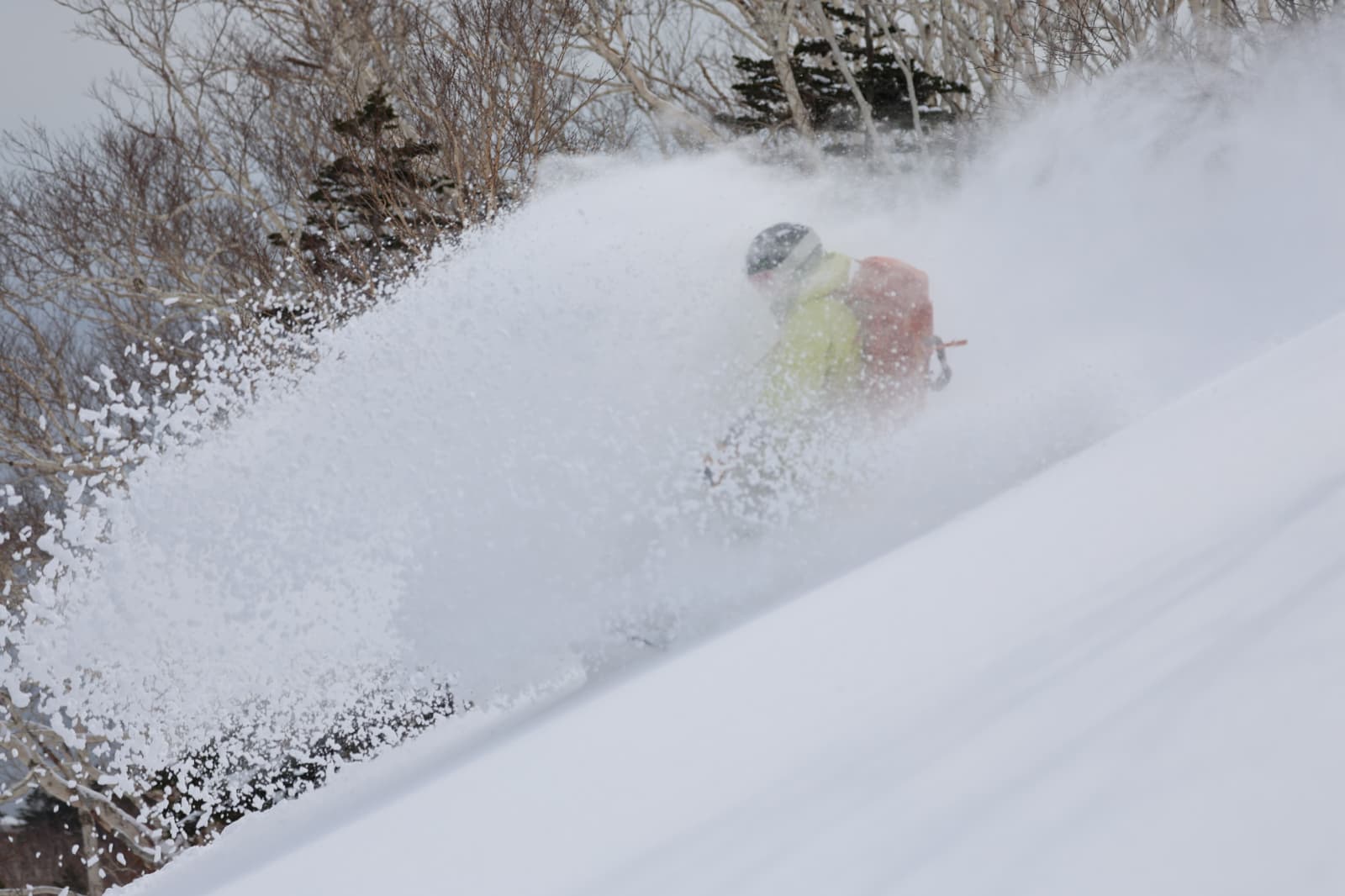
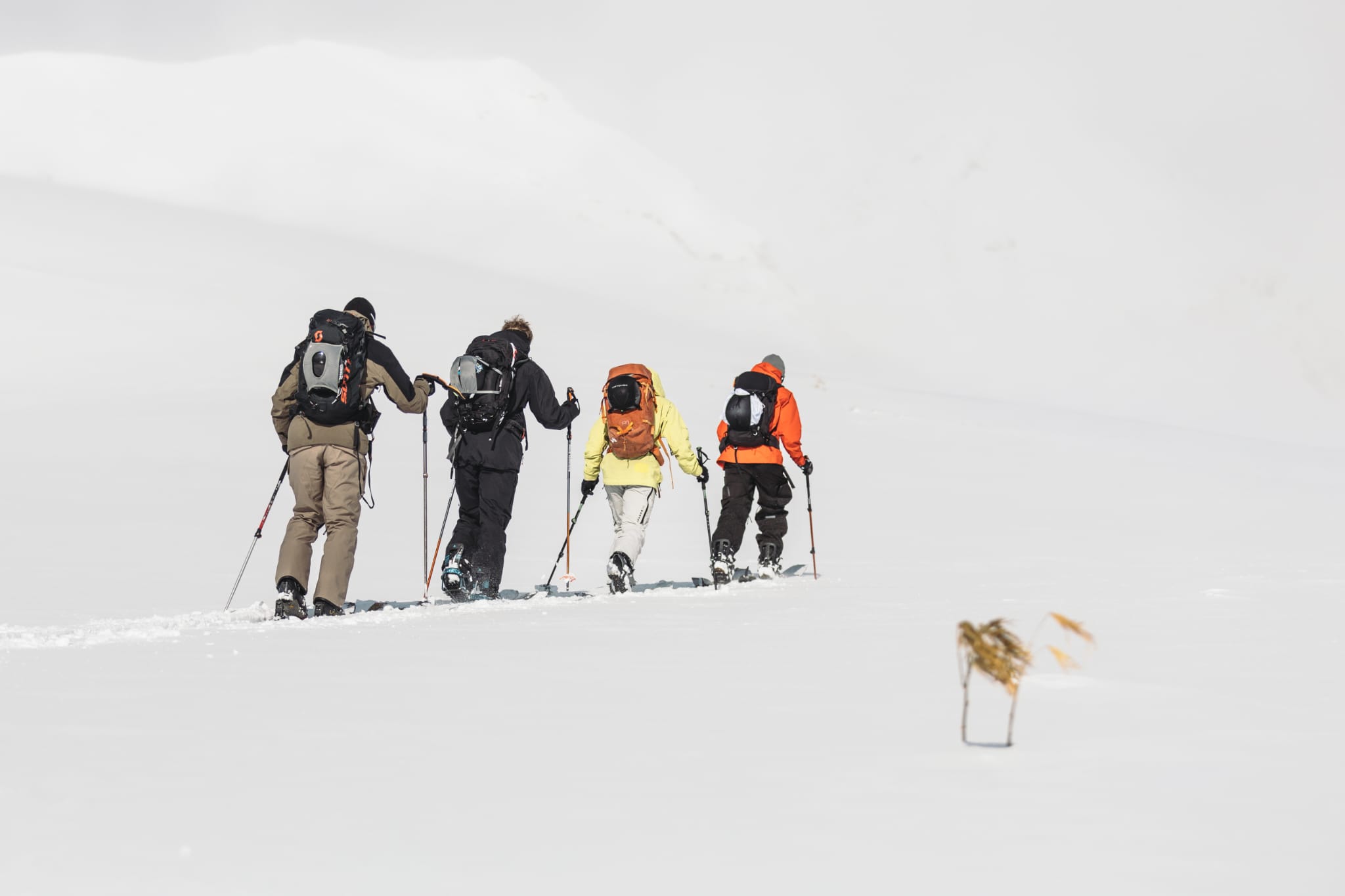
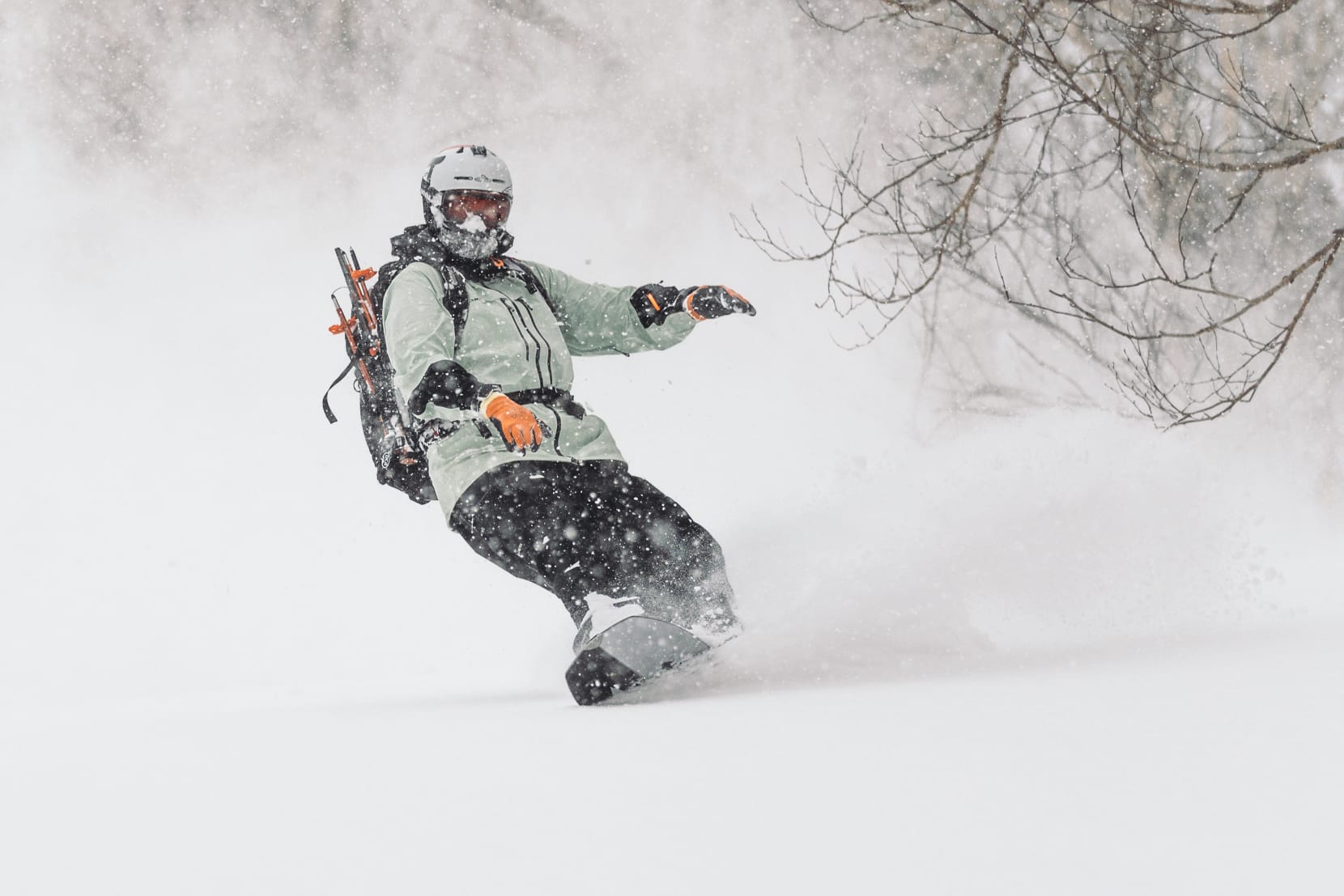
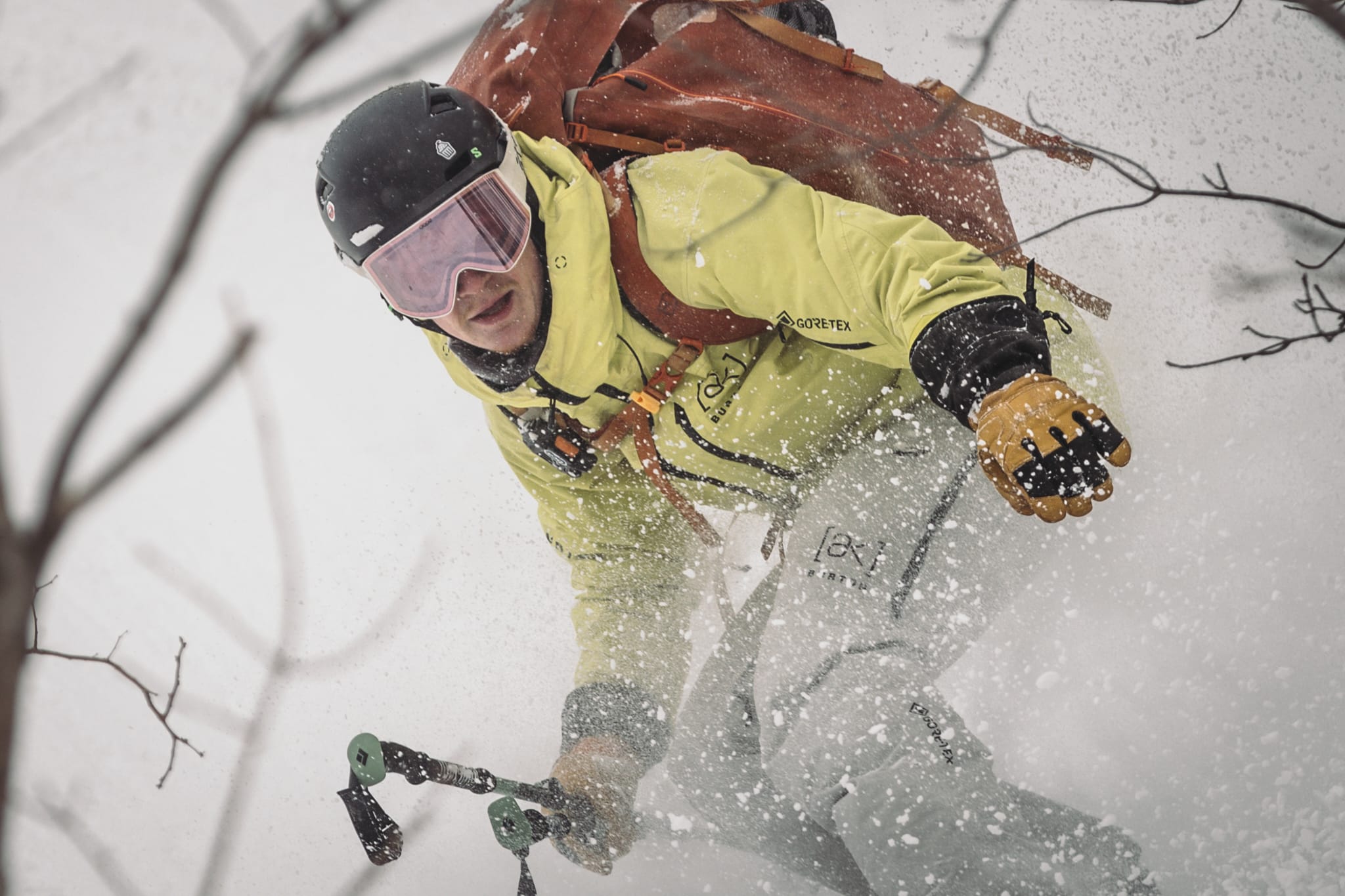
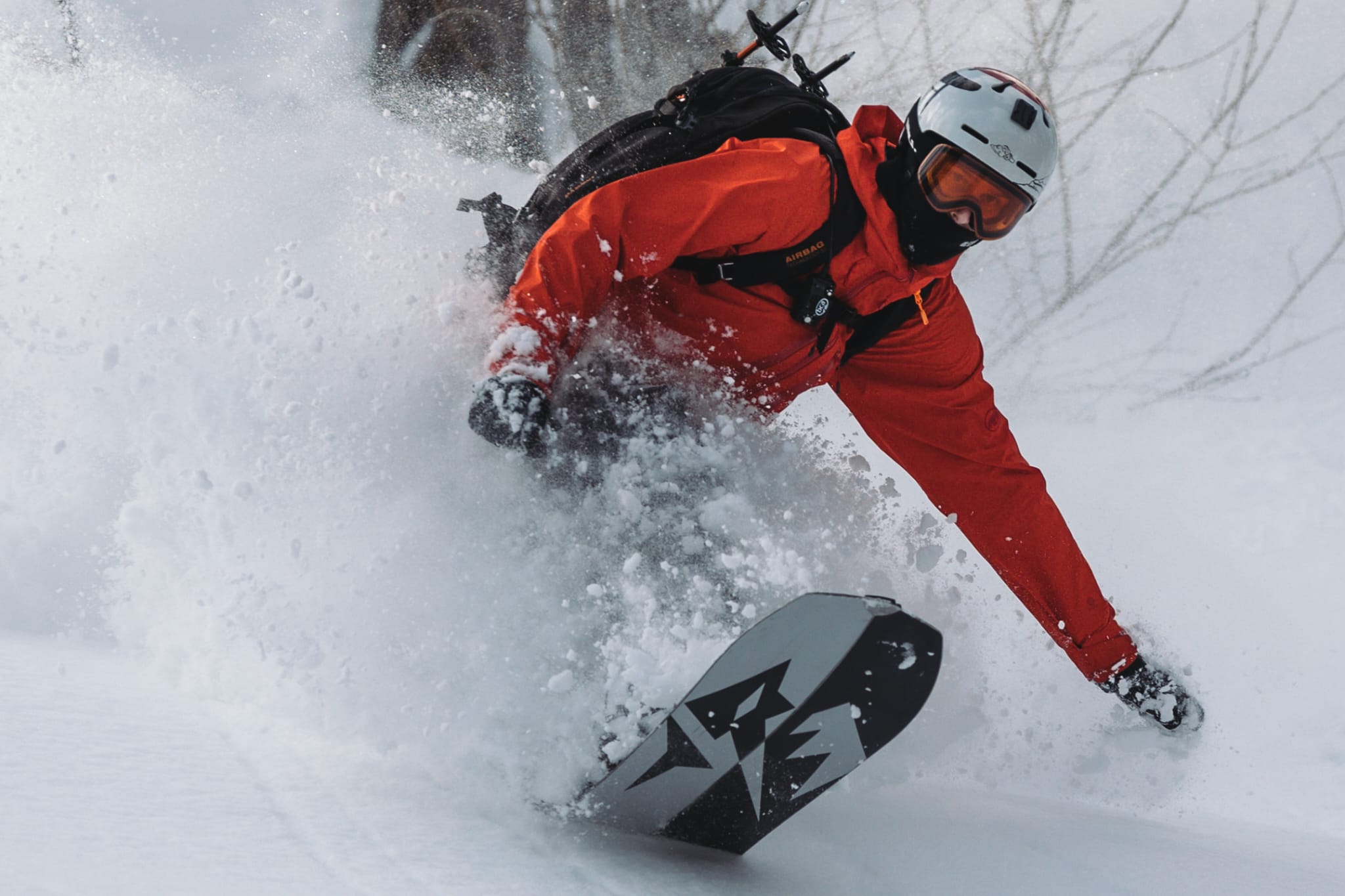
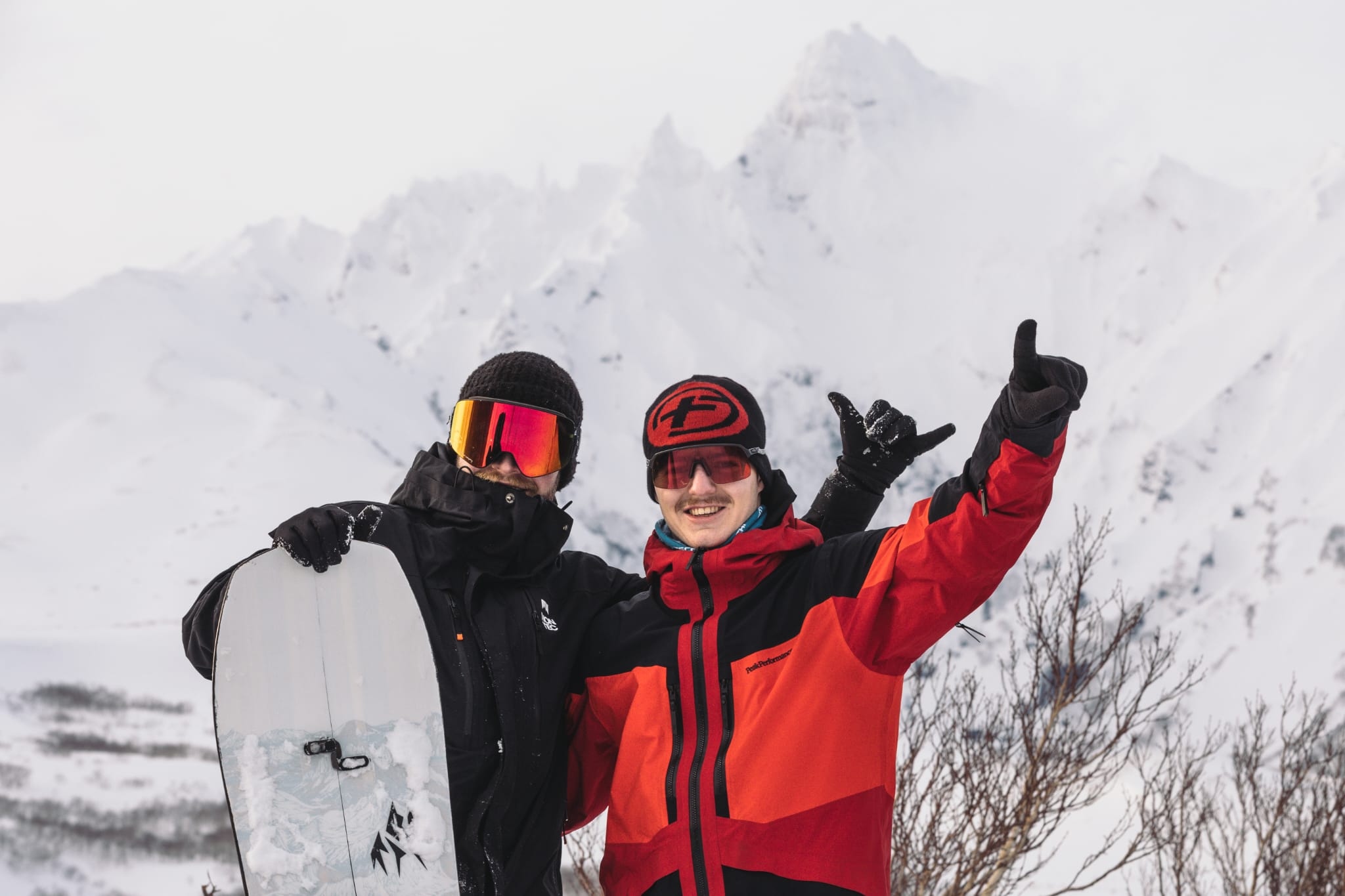
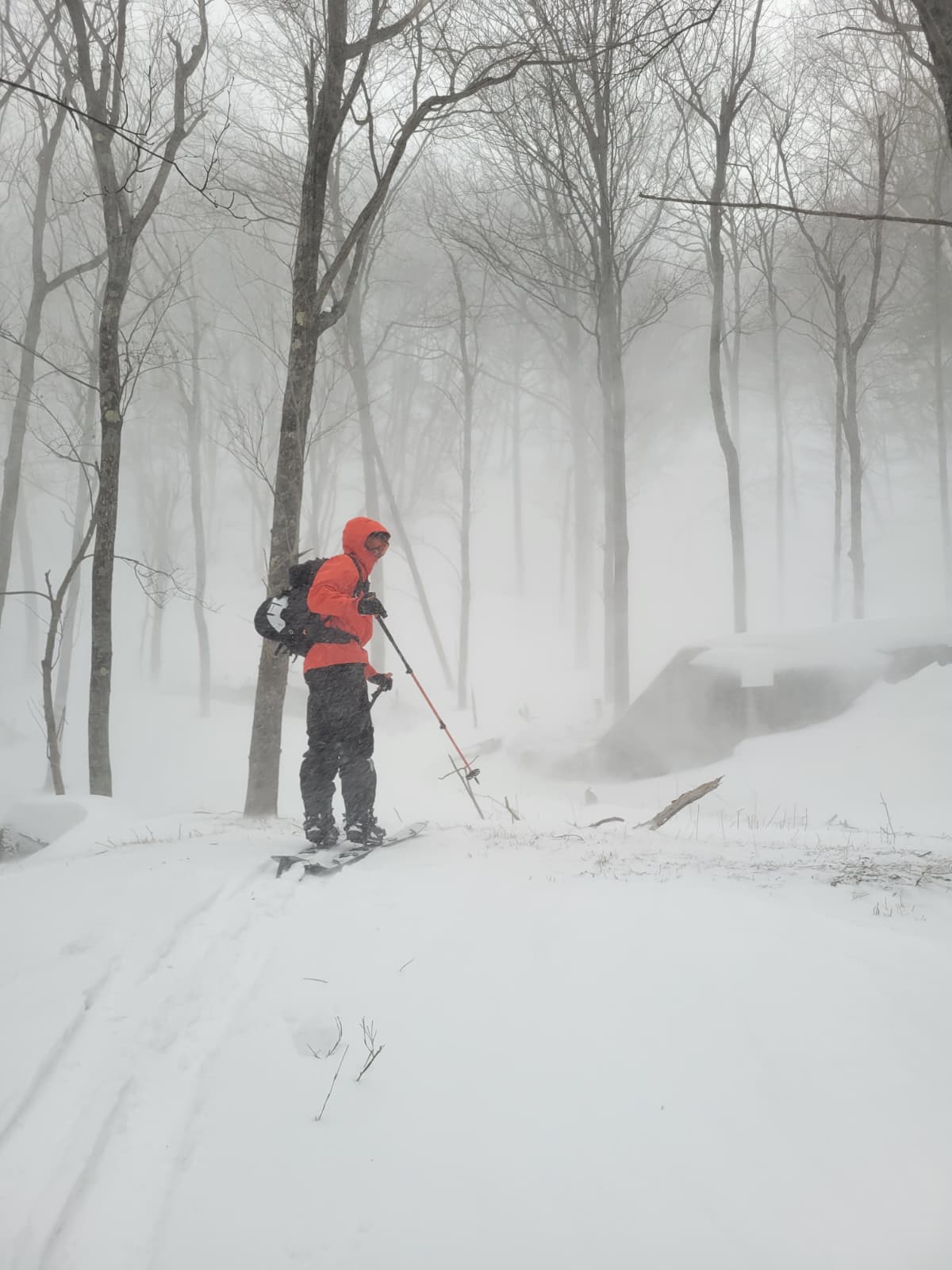
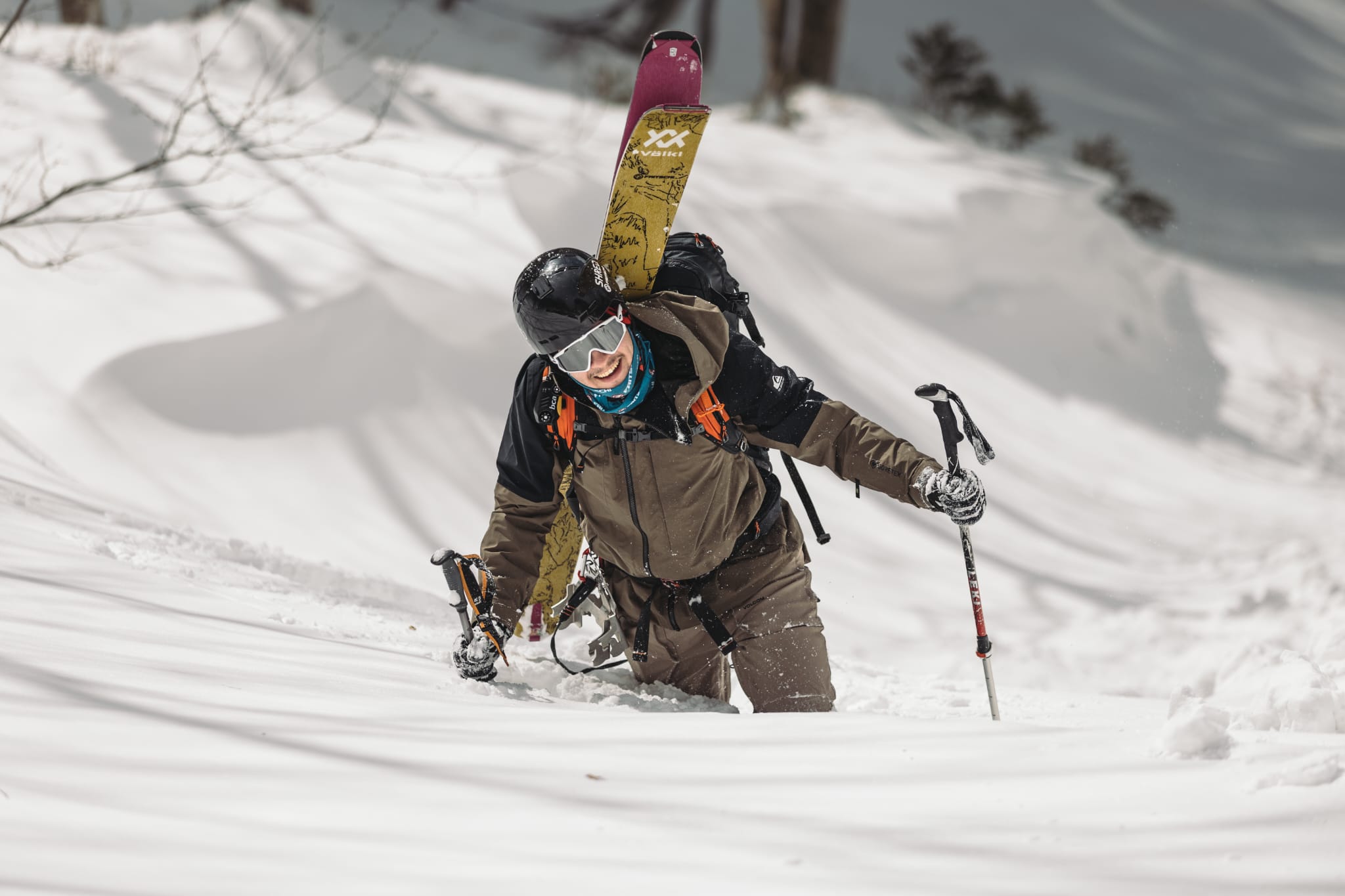
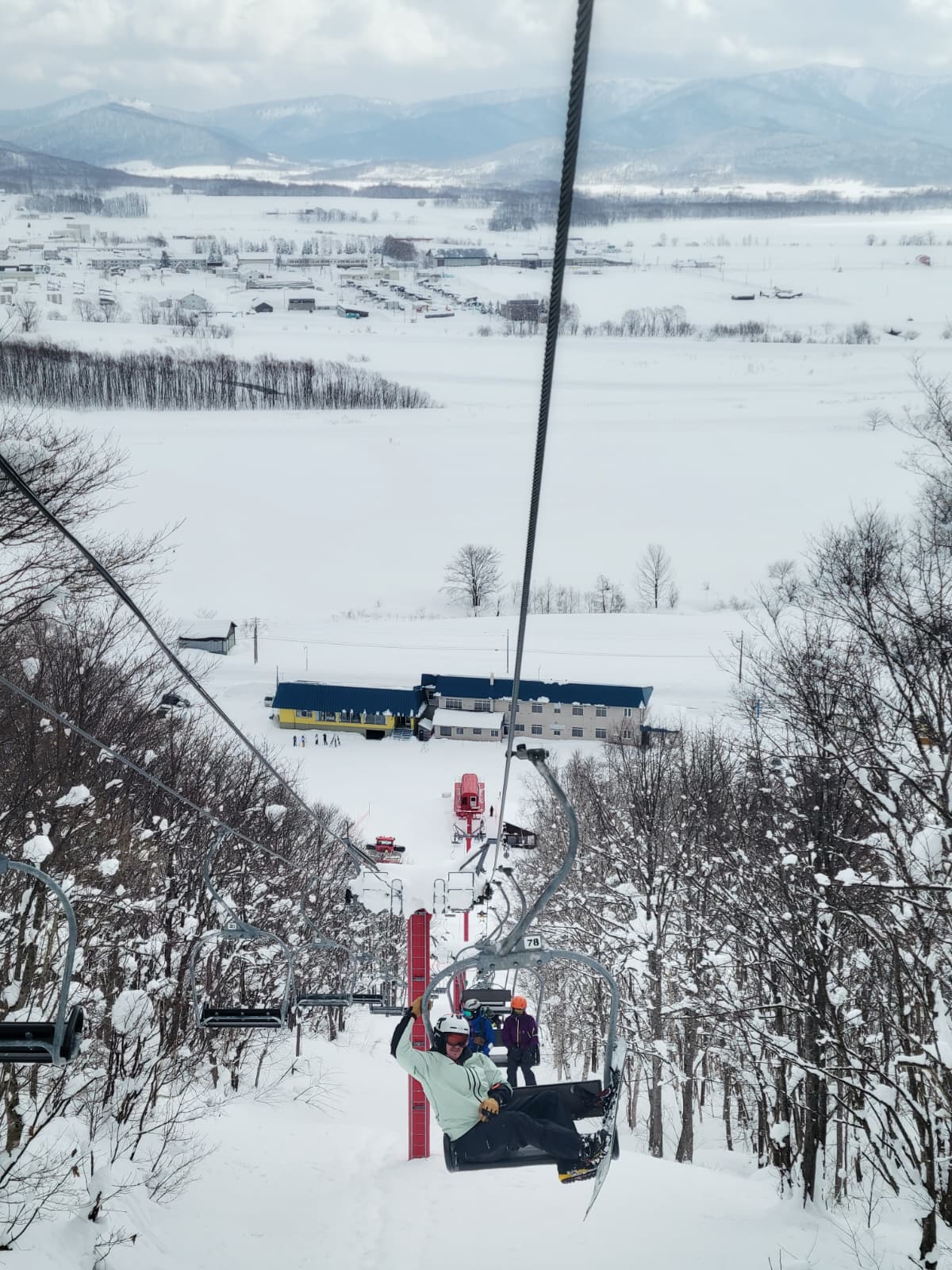
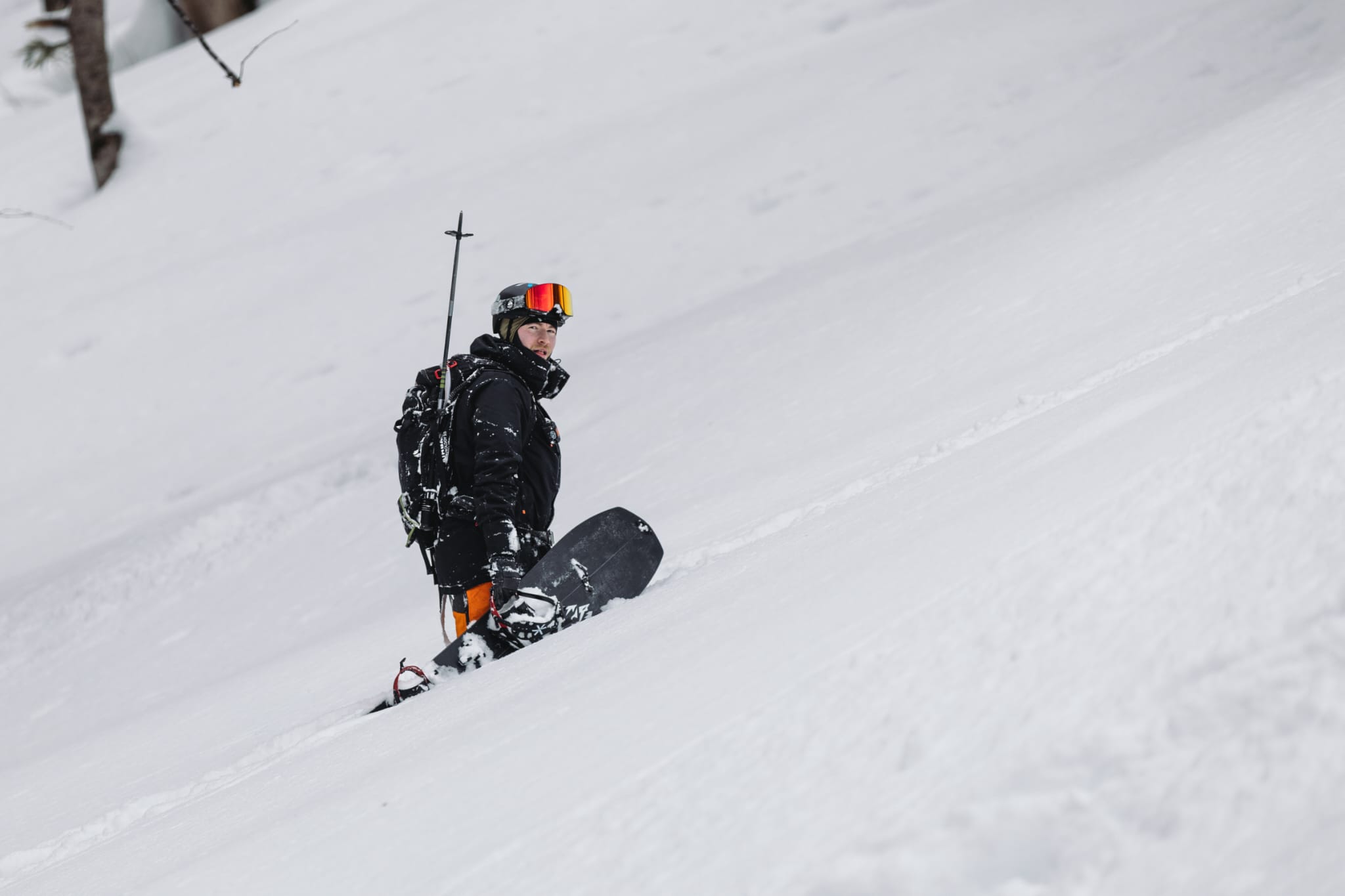
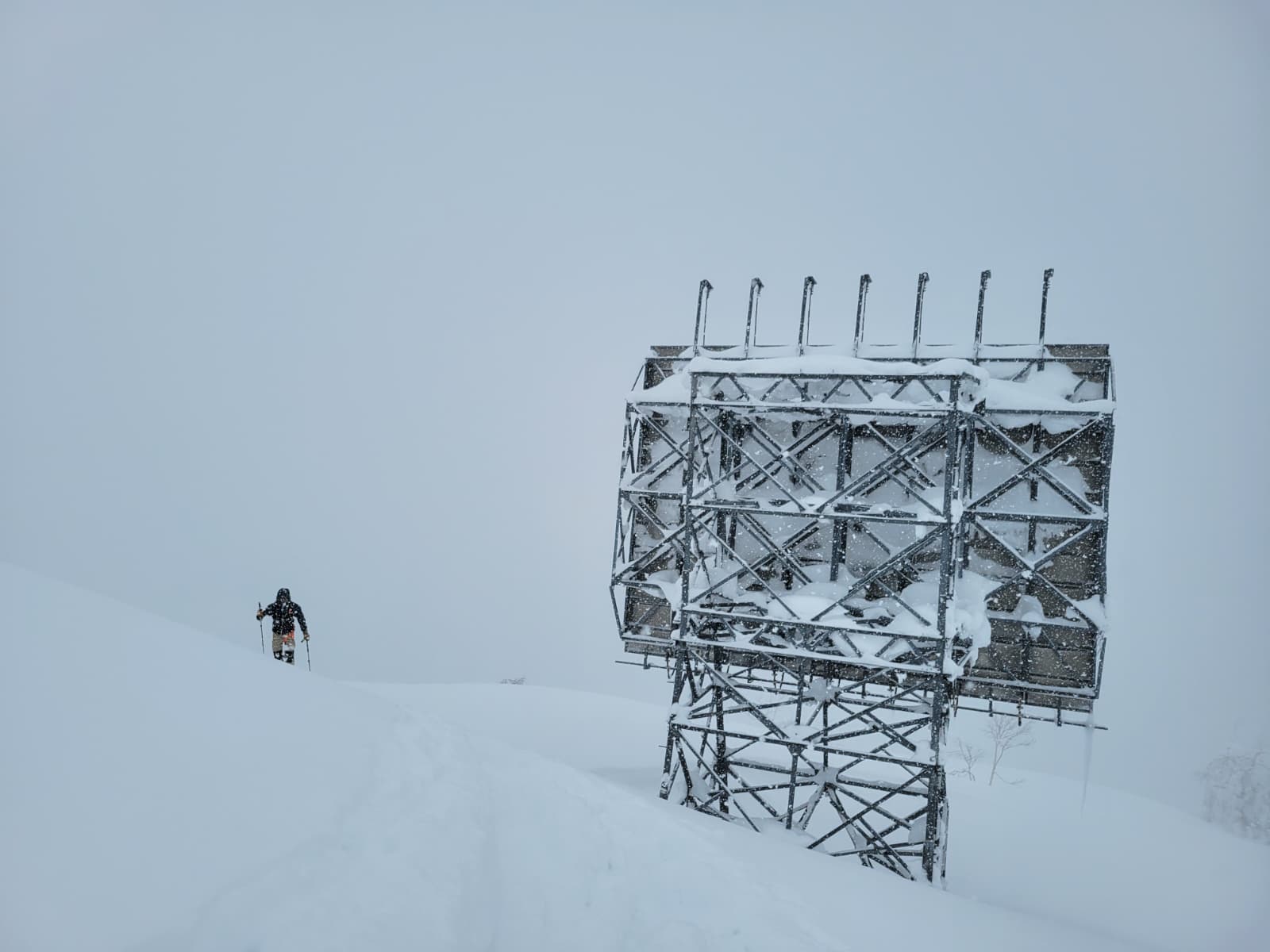
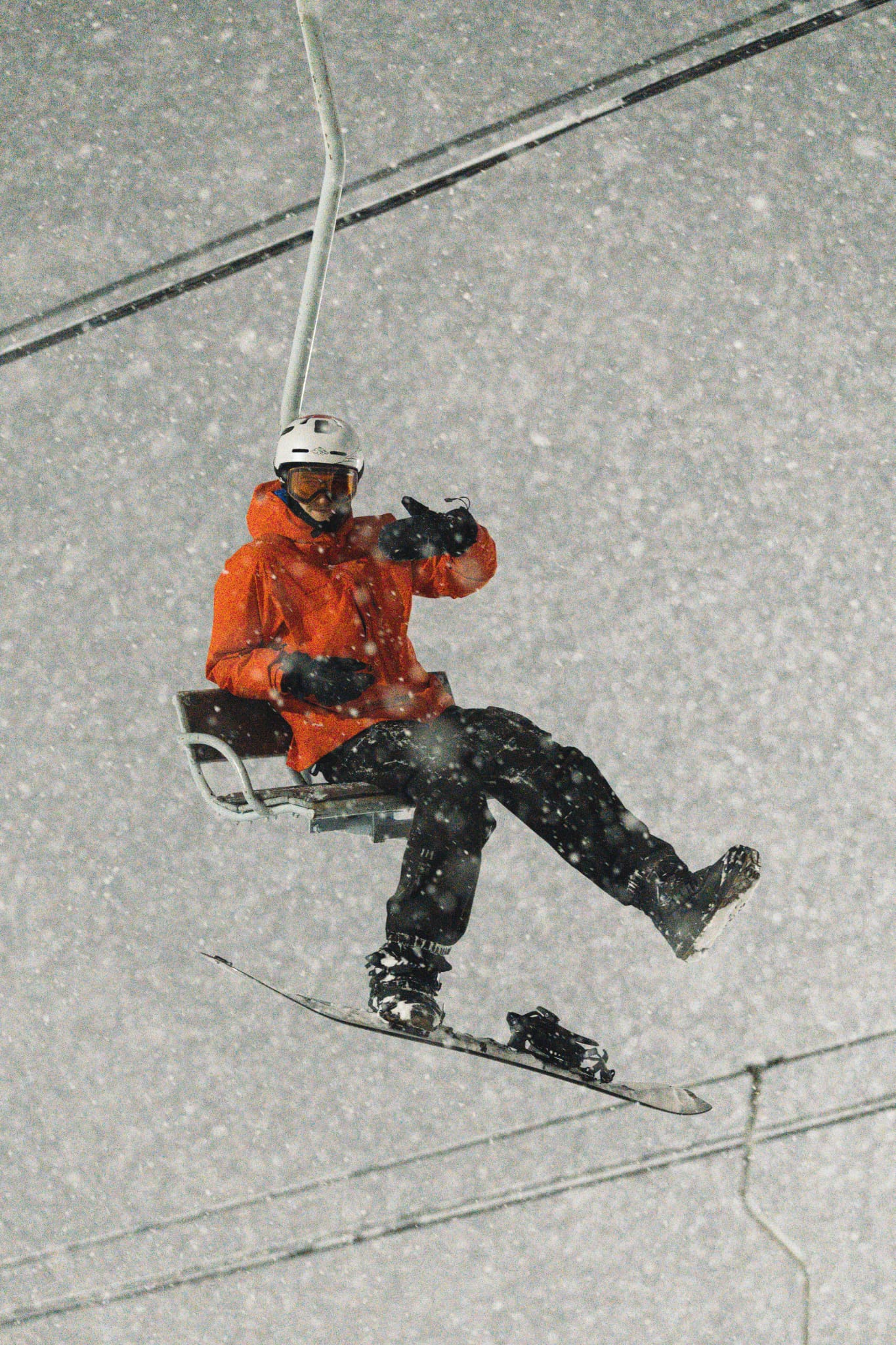
We were out on ski tours almost every day and got to enjoy the snow to the fullest. The slopes were wonderful, the snow even better, and it was essentially snowing continuously at consistently sub-zero temperatures. On days when energy was lacking or the weather didn’t cooperate, we headed to the nearby ski resorts. These were usually very, very small, often with just a single lift, but that had its own charm. Just spending a day on the board or skis, with no plan, no goal, and nobody dropping into your line.
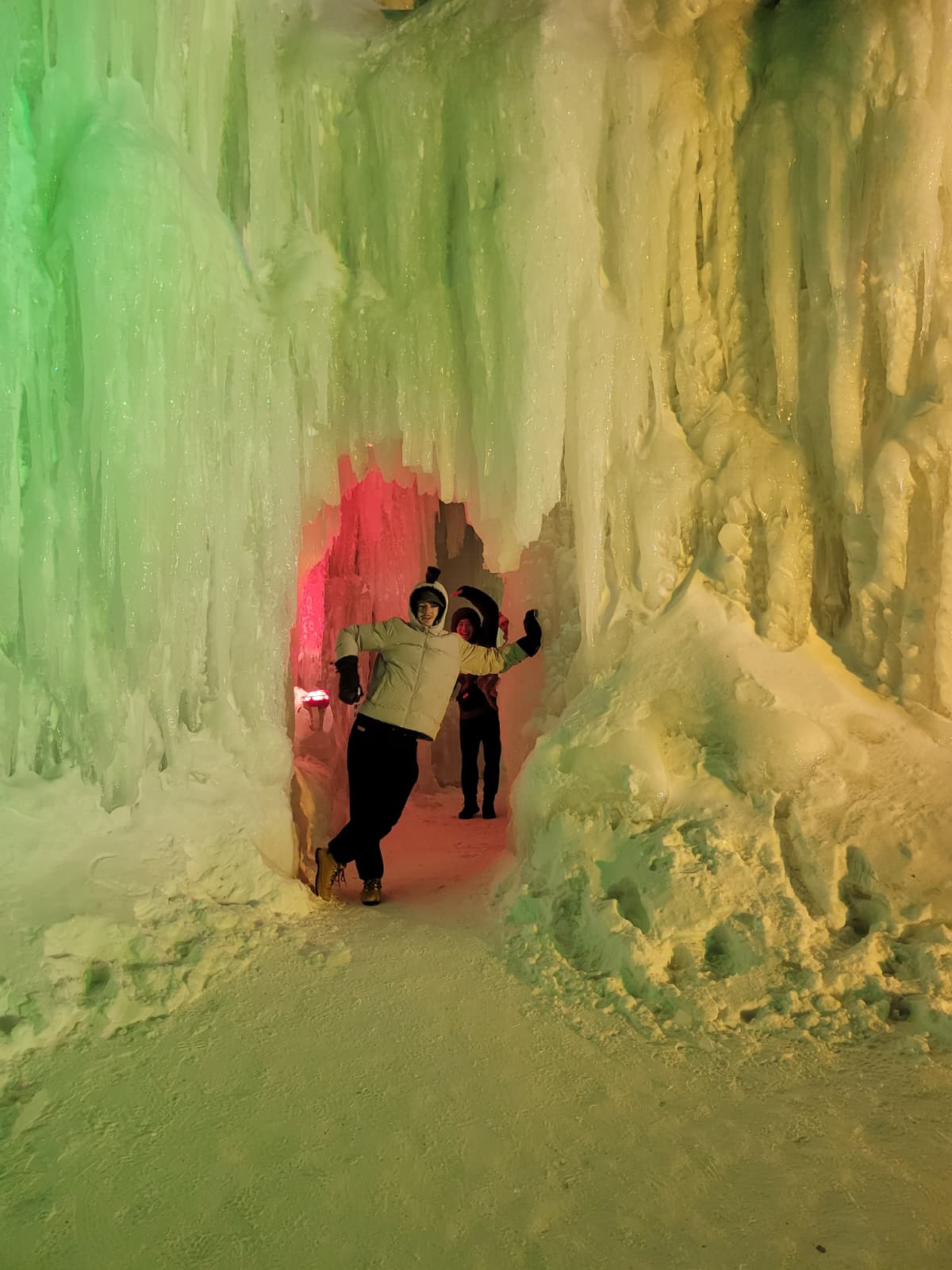
One particularly memorable stay was two days in a small village that for some reason was regularly visited by entire convoys of fully packed coaches. The vehicles would drive up to the hotel, unload, load up again, and drive back down. Fascinating to watch, truly. Almost as gripping as a reality TV show, but with more snow. Stuck in a raging snowstorm, we held back, visited the onsen, scouted potential lines and built the occasional jump. And of course we took the opportunity to try out the hotel’s own onsen for free. You need a point of comparison, after all. For scientific purposes, naturally. It was the perfect way to pass the time.
We kept treating ourselves, and that included the food. Every evening we ordered way too much: multiple drinks per person, at least two main courses, a starter and of course dessert. The locals would sometimes look at us with an expression somewhere between admiration and mild bewilderment.
Speaking of food: the language barrier regularly led to surprises and entertainment we definitely hadn’t planned for. Our Japanese vocabulary consisted of little more than “Guten Tag”, “Vielen Dank”, and “Bier”, and honestly, that got us surprisingly far. For everything else: Google Translate. For everything else that Google Translate then produced: luck and courage. So it happened that half a chicken turned out to be duck, or generally something completely different from what we had expected. Particularly “promising” sounding dishes included “Bukkake” or “kantonesische Männer”. We decided not to order those, since we truly had no idea what might have arrived at the table. And some surprises simply require even more courage than a couloir on a “totgeilen Dreier” (this expression refers to mountaineering). A little tip: there are dedicated translation apps, and we can highly recommend them!
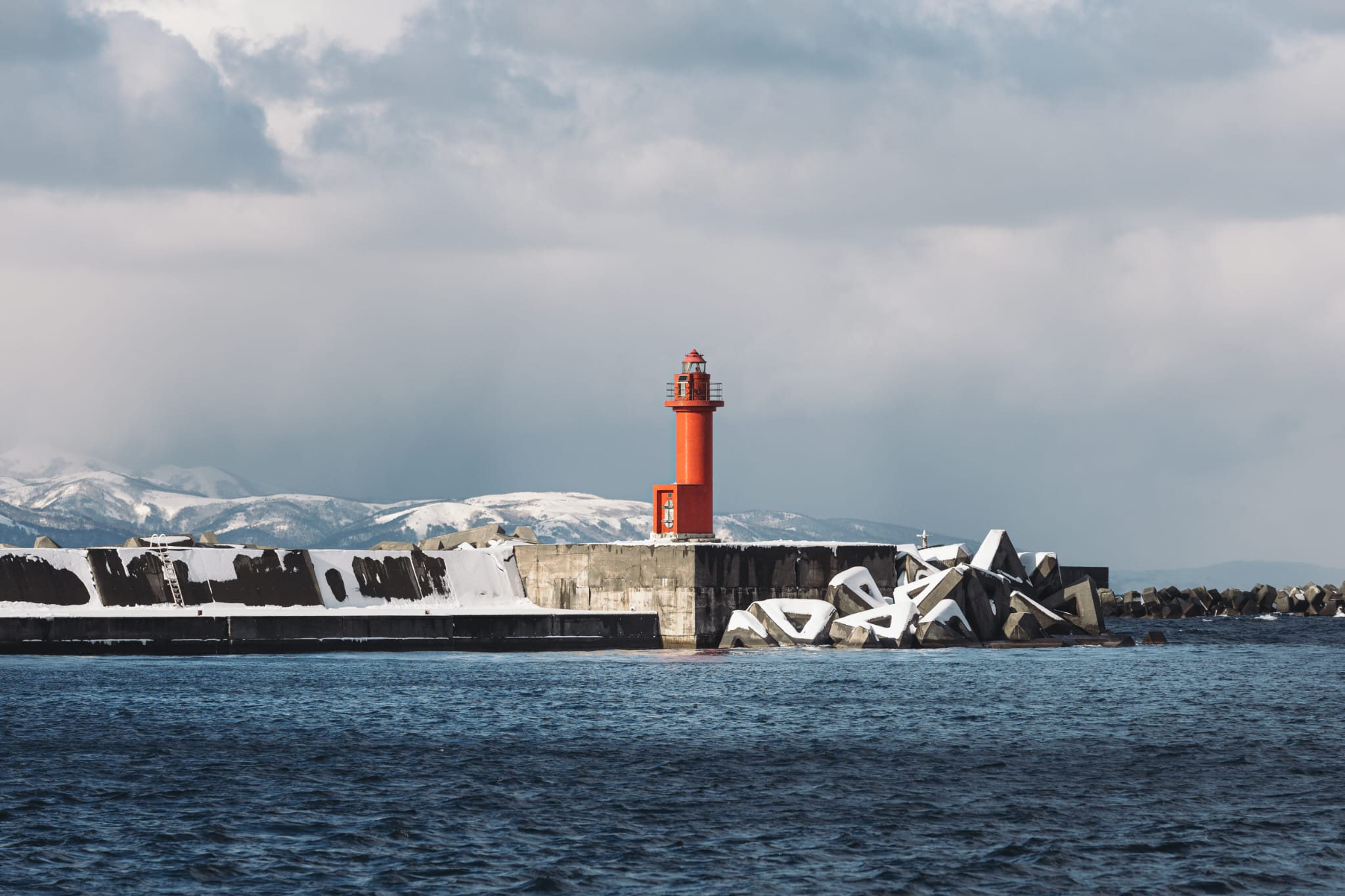
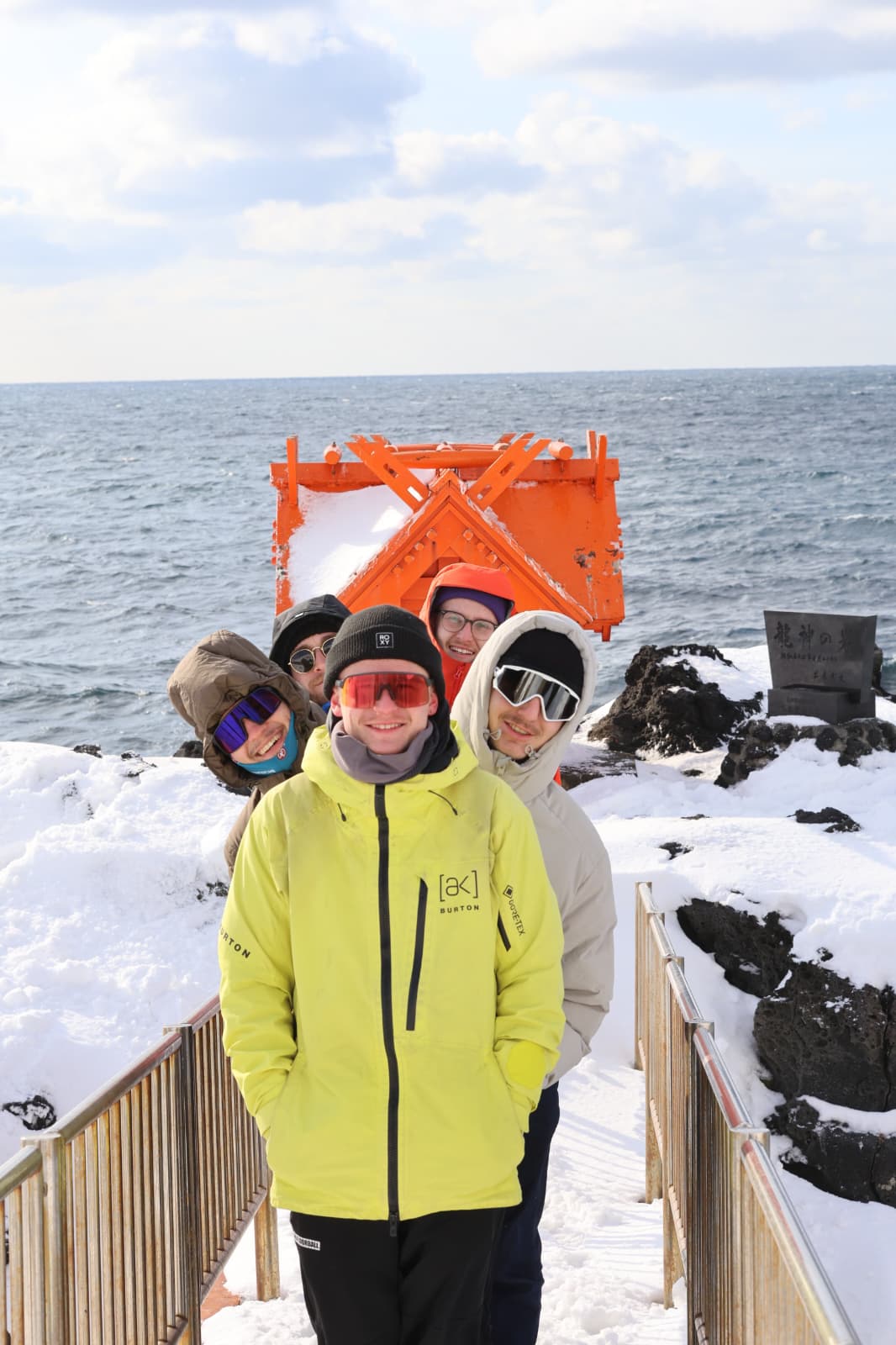
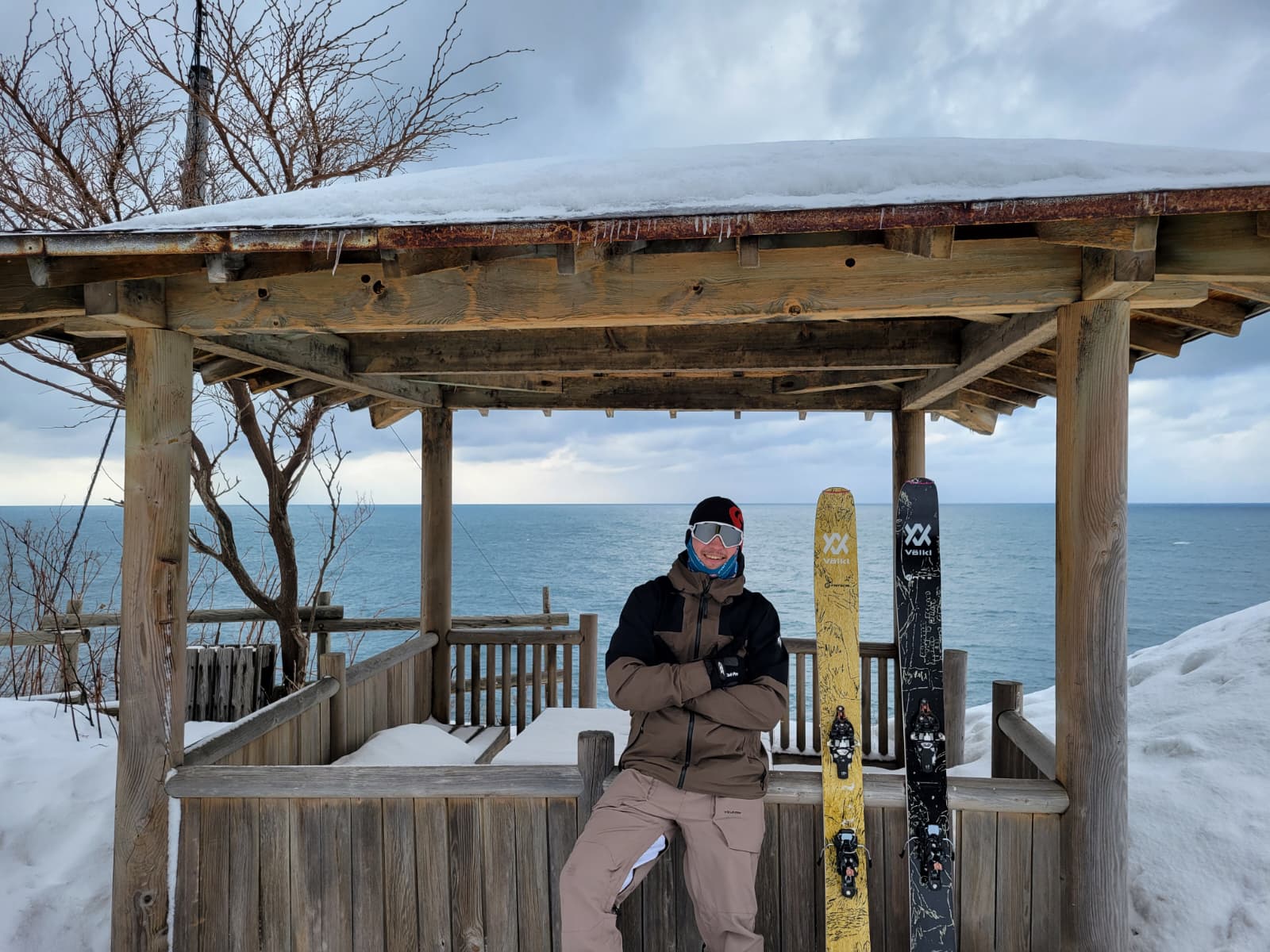
A little highlight all of its own was the café right by the harbour on the island of Rishiri. The baked goods were so good that we regularly cleaned them out, and so irresistible that we once even made a reservation for brunch. Yes, we made a reservation for a café. The entire café was run by a single person, who was incredibly warm and welcoming. On Rishiri itself, we hadn’t actually planned to climb the mountain but to ride some of its couloirs. Unfortunately that didn’t go as hoped, as rapid weather changes are simply part of daily life there. That too was quite an experience.
There were wonderful lines, but also funny moments with the locals: we walked into the only restaurant open on a Sunday and suddenly found ourselves singing karaoke with the locals, clinking glasses and taking snuff. Yes. Snuff. In Japan. They don’t know it. They don’t like it. The expressions on the locals’ faces were priceless and live rent-free in our memories, right next to the image of “Po”.
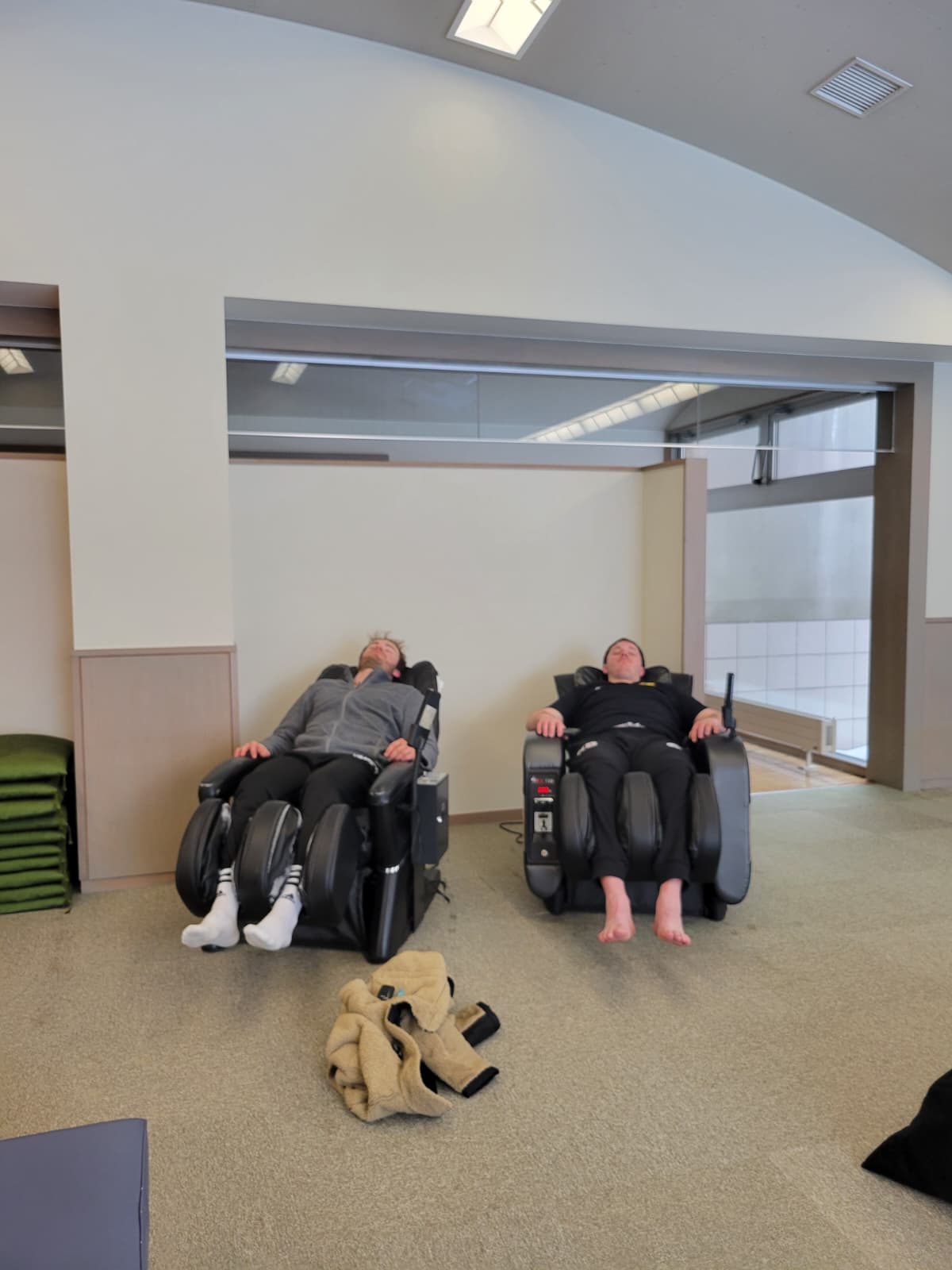
And then there were the onsen. At first we weren’t quite sure how it all worked or where the best places were. But soon enough we felt right at home. After an exhausting day in the mountains, just sitting in an onsen and chilling out… it was absolutely amazing. It became a firm part of our daily routine, whether all together or one of us on their own. One image that stuck in particular is that of “Po”: inspired by the film Kung Fu Panda, better known as Manuel, sitting on his little stool and washing himself. Calm. Content. At one with the world. The image lives rent-free in our heads and doesn’t pay utilities either.
Alongside the culinary adventures, the faces were of course equally unforgettable. Luckily we captured most of them on camera. The top 5:
Schörli Motörli, when he once again didn’t get his ramen because he simply couldn’t read the menu. The disappointment: deep. The lesson: not learned.
Laurin after a pleasant 3.5 weeks in Japan and the final surrender of his own mind. Not everything was fun and games, and his face communicated that unmistakably.
Köbi, after dear Xavier had coolly sunk a snowmobile in the snow. Köbi’s eyes said everything. Xavier’s laughter said the rest. (Note: the snowmobile was recovered. Xavier too.)
Xavier, when he had to pay no less than 400 CHF for a new splitboard binding and, since we were somewhat out of the way at that point, got to drive an extra 2.5 hours each way. You might call that “binding work”…
Manuel, after a very exhausting day in the mountains, when he received cold noodles with a raw egg as his dinner. His reaction: dignified. His inner state: less so.
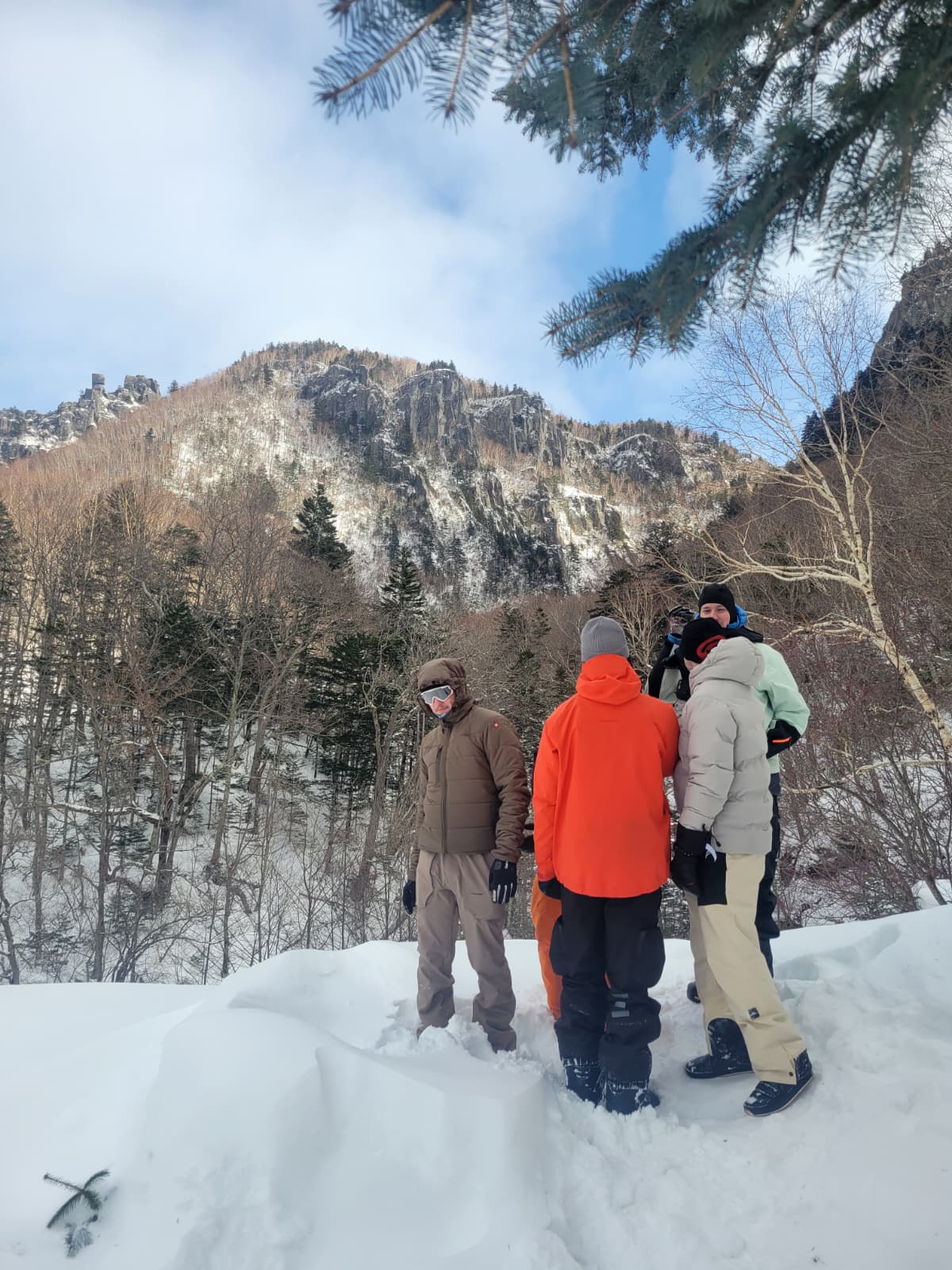
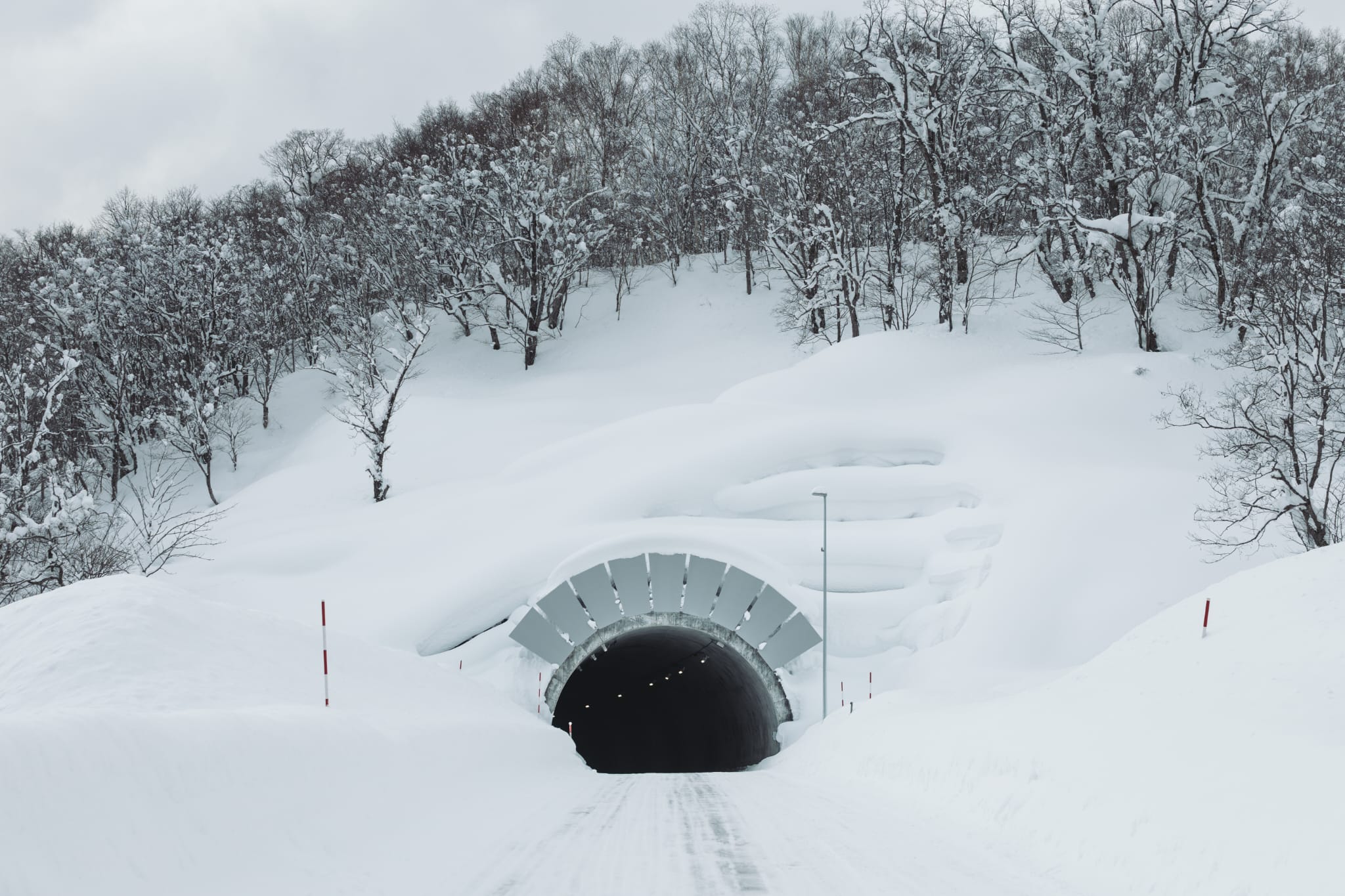
The landscape of Hokkaido was the perfect backdrop for all of this: deeply snow-covered forests, remote valleys, crisp winter air. Beautiful, but also navigationally demanding. The ski tours are significantly more challenging than in the Alps. Everything is low-lying, heavily forested and requires careful planning. There is little room for spontaneous detours off the route. Otherwise you end up in the middle of nowhere, and the middle of nowhere in Hokkaido is really, truly, deeply nowhere. The streams and rivers are a serious obstacle not to be underestimated. For anyone thinking of travelling Japan by campervan: it works brilliantly and was essential to our trip. Just be aware that the cultural difference between the rural north and the resort areas is enormous, and that in the latter you quickly get the feeling you’re no longer in Japan at all. More like Verbier. Just with sushi.
We saw so much and covered so many kilometres, and yet we’ve barely scratched the surface. Maybe Japan will call us back one day.